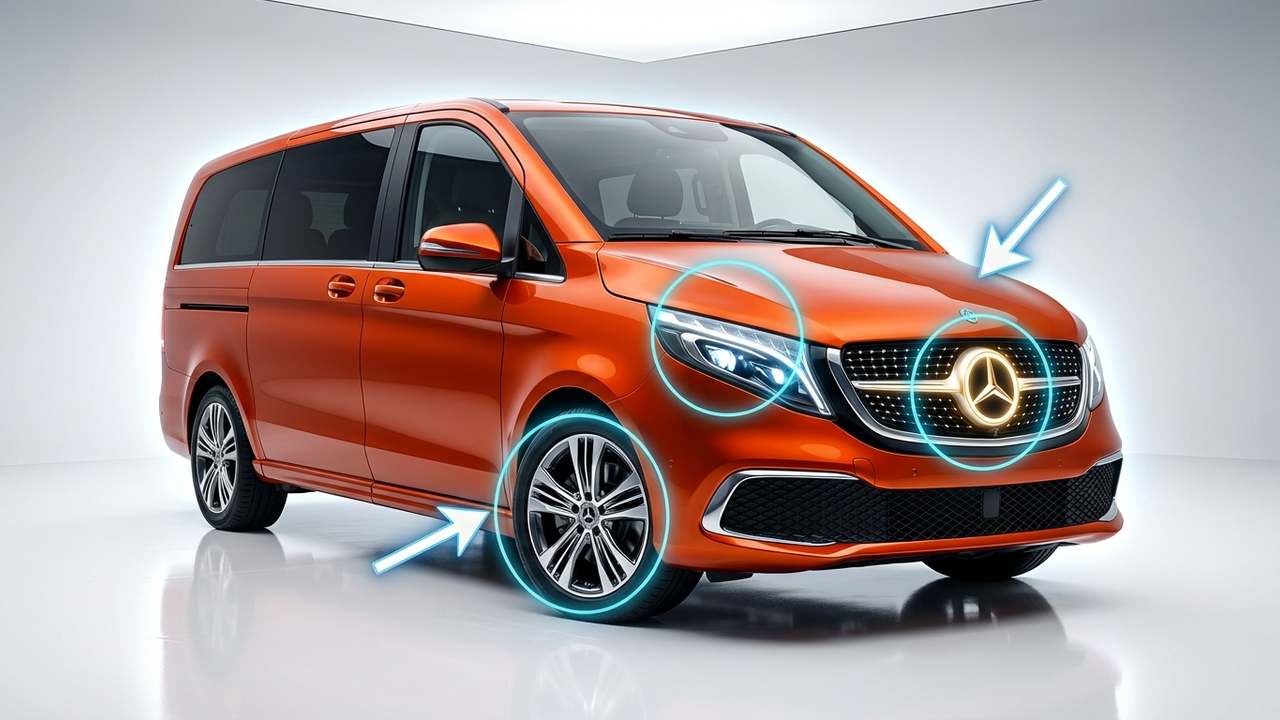
The shift to electric mobility has finally reached the people-mover segment in earnest, and the 2026 Mercedes-Benz V-Class Unveiled for USA Buyers marks a significant moment. For families, shuttle services, small-business owners and luxury-transport operators, this new V-Class promises to blend traditional Mercedes comfort with an all-electric powertrain. In a market where practicality and sustainability increasingly drive choices, the arrival of this all-electric V-Class for the U.S. raises important questions: range, usability, charging, price and whether it can replace a beloved internal-combustion van.
2026 Mercedes-Benz V-Class Unveiled for USA Buyers: Why this electric van changes the conversation
Mercedes-Benz has long been associated with premium craftsmanship and passenger comfort. The 2026 Mercedes-Benz V-Class Unveiled for USA Buyers brings that reputation into the EV era, offering a luxury-oriented multipurpose vehicle (MPV) that targets Americans who need capacity without sacrificing eco-friendly performance.
Where older V-Class models focused on diesel or gasoline powerplants in other regions, this new iteration arrives in the U.S. as an all-electric option. That shift changes the ownership equation in practical ways—fewer moving parts, quieter interiors, instant torque during merging and smooth one-pedal driving in city traffic. It also emphasizes the importance of a robust charging plan and a clear understanding of real-world range.
2026 Mercedes-Benz V-Class Unveiled for USA Buyers — Powertrain, range and charging realities
Under the skin, Mercedes has optimized the V-Class for urban and highway duties. The battery pack and electric motors are tuned for a balance of energy efficiency and passenger comfort rather than outright sportiness. For everyday drivers, this means an emphasis on usable range and predictable energy use when carrying passengers and luggage.
Range remains the headline concern for U.S. buyers, and the 2026 Mercedes-Benz V-Class Unveiled for USA Buyers targets competitive EPA-equivalent figures appropriate for family trips and shuttle runs. Charging performance will be equally important: expect both Level 2 AC charging for overnight home replenishment and higher-power DC fast charging for highway stops.

Practical considerations include the recommended home charging setup (a dedicated 240V Level 2 charger) and assessing access to fast-charging networks along common routes. Charging infrastructure across metropolitan areas and interstate corridors has expanded in recent years, but planning remains essential. Lease customers and fleet buyers may prefer managed charging solutions and on-site installation support from dealers.
2026 Mercedes-Benz V-Class Unveiled for USA Buyers — Interior, seating and tech that American families will notice
The interior design aims to be familiar to U.S. buyers used to the old V-Class but with modern EV sensibilities. Suited for long highway runs and local school-runs alike, the cabin focuses on flexible seating, premium materials and easy ingress/egress.
Expect configurable seat rows, available captain’s chairs and an emphasis on cargo-carrying versatility. Mercedes’ tech stack—likely an evolution of MBUX—will handle navigation with EV-specific routing, climate preconditioning schedules to preserve range, and integrated trip planning for charging stops. Those features matter on road trips where charging stops, cabin comfort and seat configuration decisions intersect.
2026 Mercedes-Benz V-Class Unveiled for USA Buyers: Pricing, incentives and availability across the USA
Price positioning will determine the V-Class’s market reach. Mercedes has a history of offering tiered options, from relatively accessible trims to near-limo-level luxury builds. The 2026 Mercedes-Benz V-Class Unveiled for USA Buyers is expected to have multiple trim levels so buyers can choose between a practical people-mover and a fully loaded executive shuttle.
Incentives and rebates will shape the net cost for many Americans. Federal and state EV incentives can reduce the effective price, and fleet purchasers may take advantage of other tax benefits or grants. Consumers should verify eligibility for the federal clean vehicle credit and local incentives at the time of purchase, as rules and availability change.
Delivery timing and dealer availability will vary by region. Coastal metro areas and states with stronger EV adoption often see earlier stock and larger allocations. Buyers in rural areas should check local inventories and consider dealer orders if specific configurations are required.
2026 Mercedes-Benz V-Class Unveiled for USA Buyers — Buying tips and real-life examples from the U.S. market
Buying an electric van like the V-Class is different from shopping for a compact EV or a pickup. Think about daily routines, towing needs, household charging capability and the way your family travels. Here are practical tips drawn from U.S. buyers’ experiences and dealer guidance.
- Assess daily mileage: If you routinely drive under the expected EPA-style range, a standard battery can be ideal. Longer commutes or frequent highway travel may benefit from an extended-range battery or more frequent fast charging.
- Plan home charging: Install a Level 2 (240V) charger. For many families, overnight charging will cover most needs and save money compared with public fast charging.
- Consider seating flexibility: A model with removable or sliding second-row seats can transform weekend hauling tasks or help with child-seat installation and access.
- Check for fleet-focused options: Shuttle operators should request fleet quotes, service packages and battery-warranty terms tailored to higher-mileage use.
- Test expected real-world range with a full load: If you habitually travel with five or more passengers and luggage, ask to test drive in similar conditions to evaluate energy consumption and cabin comfort.
Real-life example: a suburban family in Austin replaced a gasoline V-Class-like van with the 2026 Mercedes-Benz V-Class Unveiled for USA Buyers and reported lower fuel costs and quieter commutes. They installed a Level 2 charger and used public fast chargers on longer Texas trips. Their experience shows how a carefully planned charging approach can make an electric van seamlessly fit family life.
2026 Mercedes-Benz V-Class Unveiled for USA Buyers: How it stacks up against competition in the United States
American buyers will naturally compare the V-Class to alternatives such as electric versions of full-size vans, hybrid minivans and converted passenger vans. The Mercedes offering targets luxury-oriented buyers, so comparisons focus on comfort and technology as much as on range and utility.
Key competitors include electrified commercial platforms and premium MPVs adapted for passenger duty. When comparing, U.S. buyers should weigh these factors:
- Passenger comfort and seat count versus cargo flexibility.
- EPA-equivalent range under highway and mixed driving conditions.
- Availability of consumer and commercial dealer support across states.
- Total cost of ownership, including home charger installation and potential incentives.
For example, drivers who prioritize maximum range might look to larger battery platforms, while those who need premium appointments and advanced driver assistance systems may favor the Mercedes. City-based shuttle services in Los Angeles or New York may appreciate the V-Class’s blend of luxury and quiet operation for high-end transport gigs.
2026 Mercedes-Benz V-Class Unveiled for USA Buyers — Practical ownership considerations for U.S. drivers
Long-term ownership means thinking beyond the sticker price. Service intervals for EVs are typically less frequent, but battery health and software updates matter. Confirm the warranty terms for the battery pack and electric components, and ask about roadside assistance for EV-specific issues.
Another practical point: if you plan to tow a trailer or carry heavy payloads regularly, verify tow ratings and payload capacity. Electric vehicles can have impressive torque, but range can drop with heavy loads. Mercedes dealers should be able to provide guidance on optimal configurations and optional towing packages.
2026 Mercedes-Benz V-Class Unveiled for USA Buyers: Fleet, accessibility and business use in the American context
Beyond private buyers, businesses will watch the 2026 Mercedes-Benz V-Class Unveiled for USA Buyers closely. Ride-hailing fleets, airport shuttles and high-end limo services benefit from an electric van that offers both comfort and sustainability. In urban environments, lower operating costs and local emissions reductions can be compelling selling points.
Accessibility features are also important. Providers serving passengers with mobility needs will appreciate wide doors, low floors and adaptable seating; confirm available factory-built options or dealer retrofits for wheelchair access. For fleets, predictable charging schedules and depot charging solutions will be crucial for smooth operations.
2026 Mercedes-Benz V-Class Unveiled for USA Buyers — Ownership checklist for U.S. shoppers
Before signing paperwork, run through this quick checklist:
- Confirm the expected EPA-style range and ask for real-world test figures with a full passenger load.
- Get a firm quote for home charger installation and check if dealers offer bundled installation discounts.
- Verify battery warranty length and any mileage caps, plus available extended warranties.
- Ask your dealer about over-the-air software updates and how those will be delivered.
- Check local and federal incentives for eligibility and application steps.
Following these steps helps avoid surprises and ensures the 2026 Mercedes-Benz V-Class Unveiled for USA Buyers fits your lifestyle and budget.
2026 Mercedes-Benz V-Class Unveiled for USA Buyers
The 2026 Mercedes-Benz V-Class Unveiled for USA Buyers represents a meaningful leap in bringing premium, all-electric people movers to the American market. It answers growing demand for luxury, practicality and environmental responsibility in one package. For U.S. buyers, the model promises to be versatile—suitable for family life, business shuttles, or executives seeking a refined ride with green credentials.
Actionable advice: plan home charging and evaluate state and federal incentives before purchase, test drive with your regular passenger load, and compare total cost of ownership across trims. If you run a fleet, engage with your dealer early about service plans and depot charging solutions. The V-Class will not only change the way you think about vans—it could reshape your daily routine with quieter commutes, lower maintenance needs and a modern in-cabin experience.
If the 2026 Mercedes-Benz V-Class Unveiled for USA Buyers aligns with your priorities, contact local Mercedes-Benz dealers for reservation details, fleet pricing and confirmed specs. With the right preparation, this new electric V-Class can be both a practical workhorse and a comfortable, stylish family vehicle.